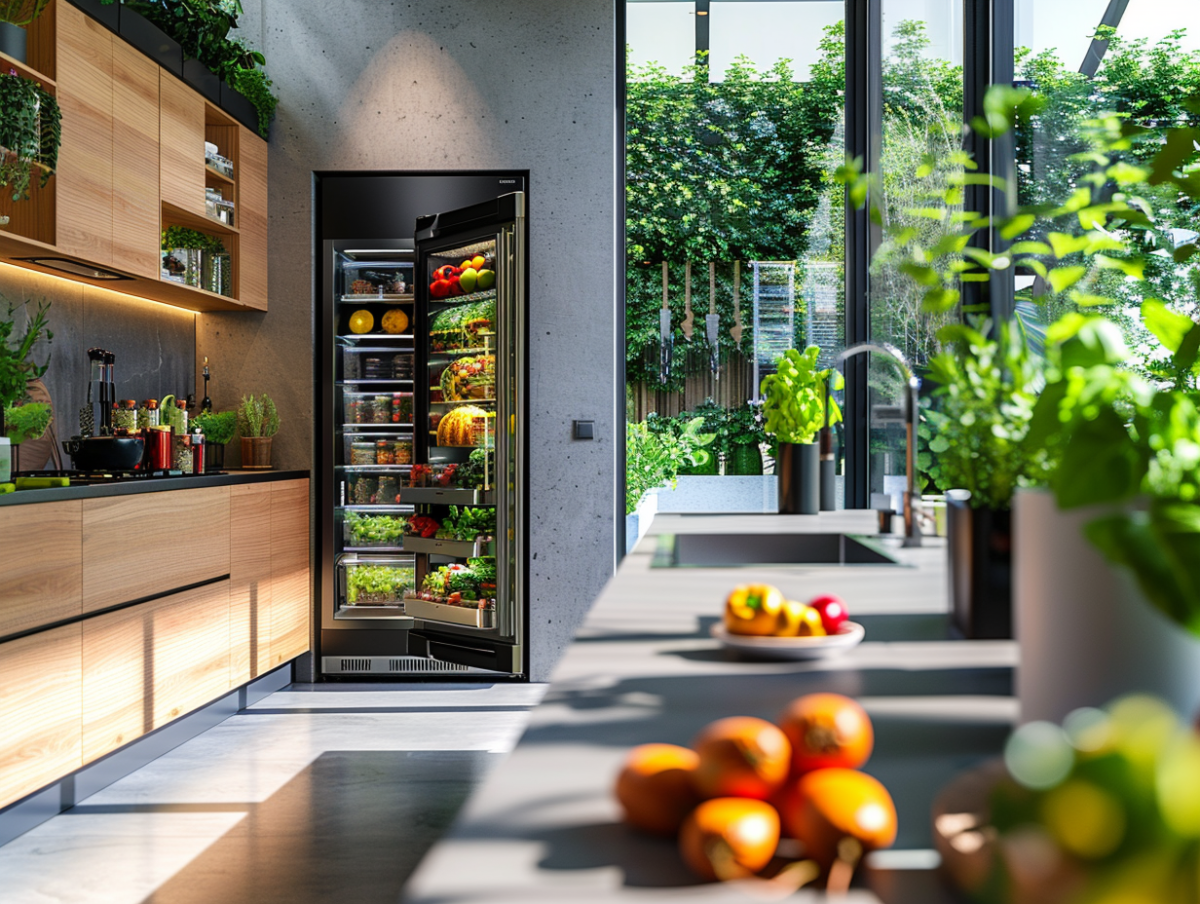
With the rising energy prices and increasing ecological awareness, optimizing the energy consumption of household appliances has become a necessity. Among these appliances, the freezer, often overlooked, plays a fundamental role in our kitchens and daily consumption. Optimal operation of this equipment can lead to significant savings and help reduce the carbon footprint of households. Through simple gestures and practical tips, it is possible to maximize the efficiency of your freezer while preserving the quality and shelf life of your food.
Choosing and using your freezer in an eco-responsible way
The careful selection of a freezer revolves around the energy label, a true compass for consumers concerned about their ecological footprint and electricity bill. Since March 2021, class D represents the peak of energy efficiency for these appliances. ADEME, the reference authority, recommends prioritizing this class when purchasing, a signal that consumers should interpret as a guarantee of performance. It is essential to scrutinize these labels, which inform not only about energy consumption but also about how long it takes for a freezer to reach its optimal temperature, a determining criterion for long-term energy efficiency.
Eco-responsibility is also embodied in the daily use of this household appliance. Did you know that a well-filled freezer consumes less energy than its half-empty counterpart? Indeed, the mass of frozen food helps stabilize the internal temperature, thereby reducing the workload of the appliance. However, vigilance is still necessary: an opposite excess, overfilling, could hinder the circulation of cold air and thus compromise the desired energy efficiency.
Optimal management of internal space, an adequate temperature, and regular maintenance form the triptych of energy efficiency for any freezer owner. The impact on the electricity bill is not negligible, prompting a thorough reflection on our consumption habits. Energy is a precious resource, and its rational use in our homes, through simple gestures and informed choices, represents a significant step towards a sustainable lifestyle.
Maintenance and tips for minimal energy consumption
Regular maintenance of the freezer is an essential lever for controlling its electricity consumption. The formation of frost, a true scourge for energy efficiency, must be combated through regular defrosting. This process, often neglected, helps maintain the freezer at its optimal performance level. Indeed, even a thin layer of ice can substantially increase energy consumption, especially in static cold models.
Temperature control is another key point in the energy optimization of a freezer. A precisely set temperature, usually around -18°C for freezers, ensures the proper preservation of food while avoiding excessive electricity consumption. It is wise to use certified thermometers to ensure that the internal temperature does not deviate from the recommended standards.
The choice of freezer model also influences energy consumption. Upright freezers, compared to chest freezers, often offer better ergonomics but may prove slightly more energy-hungry. Ventilated cold technology, although more expensive to purchase, is more economical in the long run due to its even distribution of cold, which avoids temperature fluctuations and frost formation. Consider these parameters when acquiring your equipment and during periodic reviews of your domestic space layout.