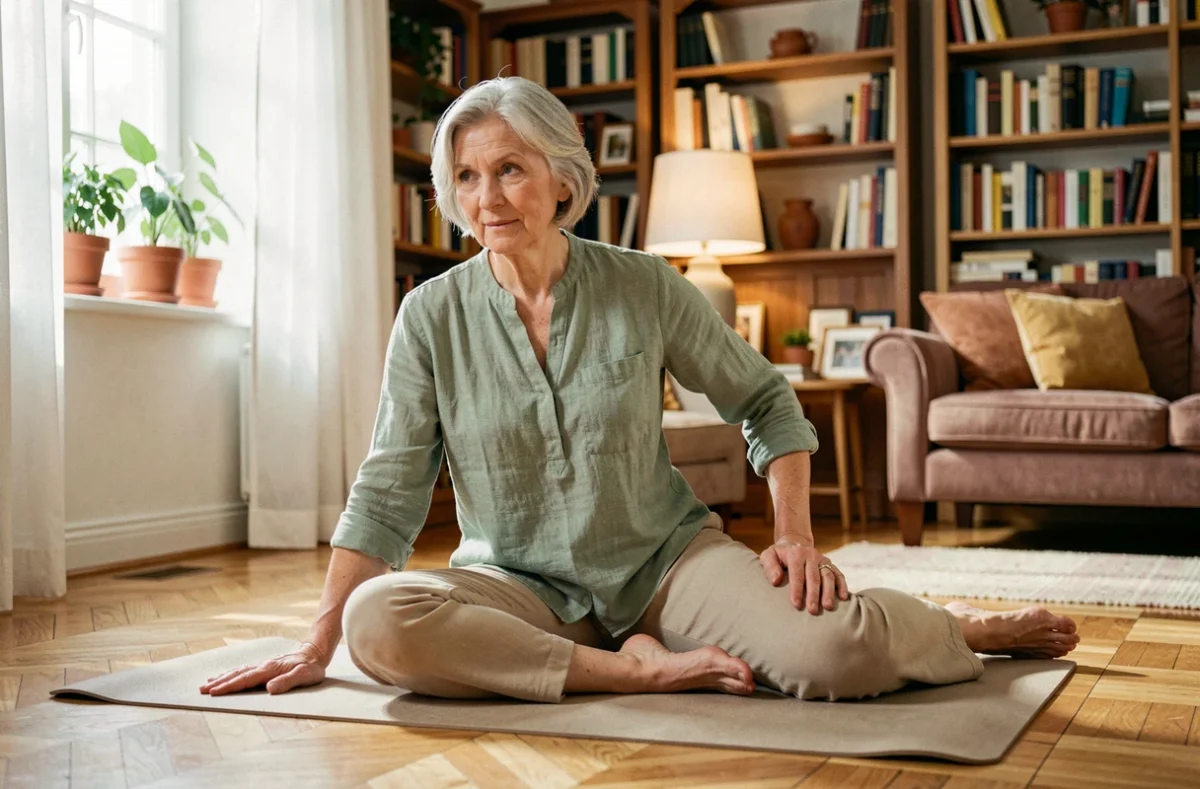
The health of seniors relies on a set of physiological mechanisms that evolve with age: a progressive decrease in muscle mass, changes in bone metabolism, and alterations in sensory functions. Preserving daily well-being after 60 years requires acting on these mechanisms before they lead to a loss of autonomy. Early identification of vulnerabilities and adapting lifestyle habits are the two most documented levers.
Prevention assessment at key ages: a system still underutilized by seniors
A free and personalized prevention assessment is now available at several key ages, particularly between 60 and 65 years, and then between 70 and 75 years. This appointment lasts about 30 to 45 minutes and can be conducted by a doctor, pharmacist, nurse, or physiotherapist.
The assessment is not limited to a standard medical consultation. It results in a prevention plan tailored to each individual’s profile, covering mobility, nutrition, memory, vision, hearing, and psychological state. This approach aligns with the WHO’s ICOPE program, which recommends identifying vulnerabilities well before a loss of autonomy sets in.
However, the process remains largely unknown. Many affected individuals are unaware that they can request this assessment from local healthcare professionals, including at pharmacies. Finding information on the Vous et Votre Santé website helps to better understand the prevention measures available for each age group.
Seniors’ vaccination: gaps beyond seasonal flu
Vaccination coverage against the flu is improving among those over 65, but delays persist for shingles, pneumococcus, and Covid-19. Data from Public Health France confirms this disparity. Communication campaigns focus on the flu, leaving other vaccinations, which have well-established benefits for this age group, in the shadows.
Shingles, for example, causes neuropathic pain that can last for several months and significantly impair quality of life. Pneumococcal vaccination reduces the risk of invasive pneumonia, a common cause of hospitalization among seniors.
Check your vaccination record with a professional
During the prevention assessment or a standard consultation, asking for an update to the vaccination schedule is a simple reflex. The doctor or pharmacist can identify missing boosters and propose a catch-up schedule. A complete vaccination follow-up protects against avoidable complications that heavily impact autonomy.
Muscle mass and balance: preventing falls through adapted physical activity
Sarcopenia (age-related muscle loss) begins well before 60, but its consequences become visible when the strength of the lower limbs is no longer sufficient to maintain balance. Falls are one of the leading causes of loss of autonomy among the elderly.
Three types of exercises complement each other to maintain mobility:
- Targeted muscle strengthening of the quadriceps and calves, at least twice a week, helps stabilize walking and secure stair climbing
- Balance exercises (single-leg support, heel-to-toe walking) reduce the risk of falling by engaging proprioceptive receptors, whose sensitivity decreases with age
- Daily walking, even at a moderate pace, maintains cardiovascular endurance and bone density, two protective factors against fractures
Starting with supervised sessions with a physiotherapist or in an adapted physical activity program makes it easier for sedentary individuals to resume activity. The goal is to maintain regularity rather than aiming for intensity.
Nutrition and hydration after 60: adapting intake to real needs
The energy expenditure for the same physical activity is greater in seniors than in younger adults. The feeling of fullness arrives more quickly during a meal, while thirst is less pronounced. This dual mechanism exposes them to two risks: protein-energy malnutrition and chronic dehydration.
Proteins and calcium: two nutritional priorities
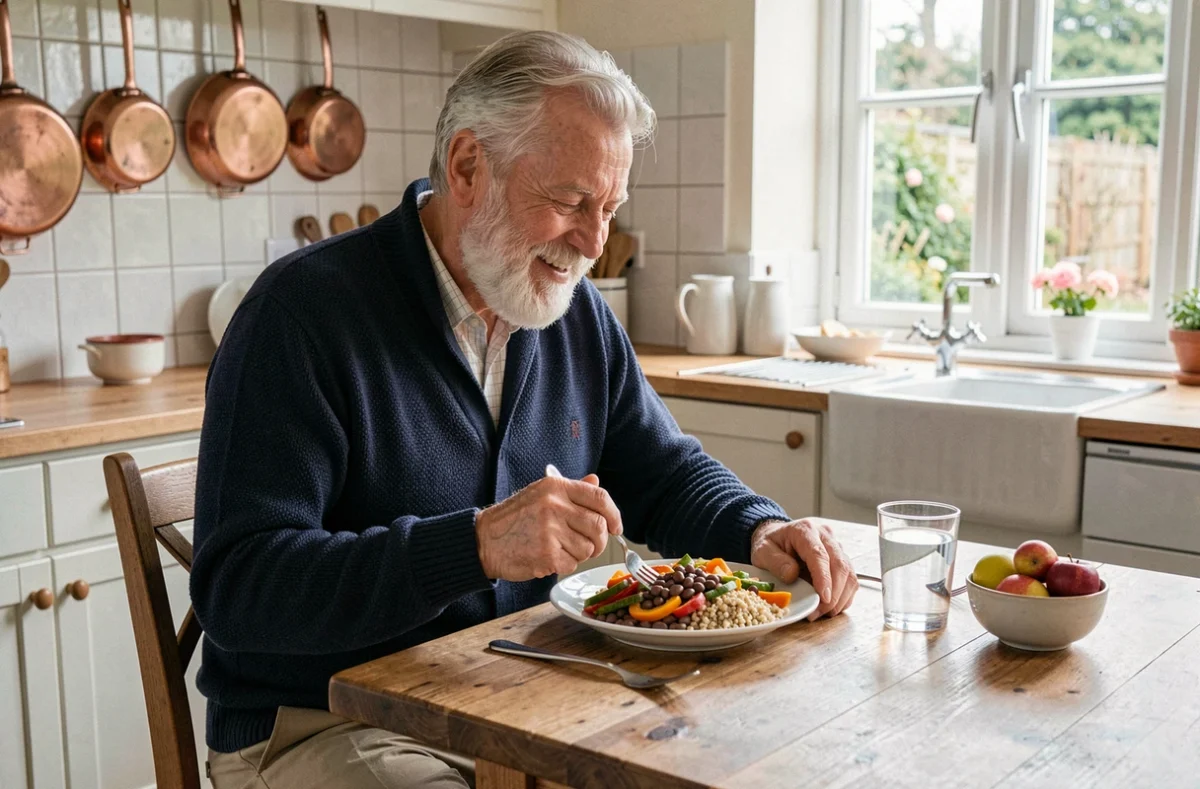
Consuming eggs, meat, or fish at least once a day helps to preserve muscle mass against sarcopenia. Dairy products contribute to maintaining bone health due to their calcium content. Splitting meals into three meals supplemented by snacks (yogurt, fruit, applesauce) compensates for the reduction in portions at main meals.
Hydration requires particular vigilance. Drinking regularly, in the form of water, herbal teas, or soups, remains the most effective measure. In hot weather, dehydration can occur quickly in elderly individuals whose thermoregulation mechanism functions less effectively.
Early identification of vulnerabilities: acting from the fifties to age healthily
Recent studies on healthy aging converge on one finding: prevention is best started before old age. Waiting for the first signs of dependence to act significantly reduces the margin for maneuver. The five areas to monitor closely are mobility, memory, nutrition, sensory abilities (vision and hearing), and psychological state.
Social isolation, often absent from strictly medical health assessments, is a major risk factor for cognitive decline and depression. Maintaining collective activities, even modest ones, contributes to prevention just as much as physical exercise or nutrition.
The WHO’s ICOPE program provides a structured framework for this identification. It relies on simple tests, achievable in a few minutes, which allow for directing individuals toward appropriate follow-up before vulnerabilities turn into established loss of autonomy. Regular screening for vulnerabilities remains the best lever to prolong autonomy at home.