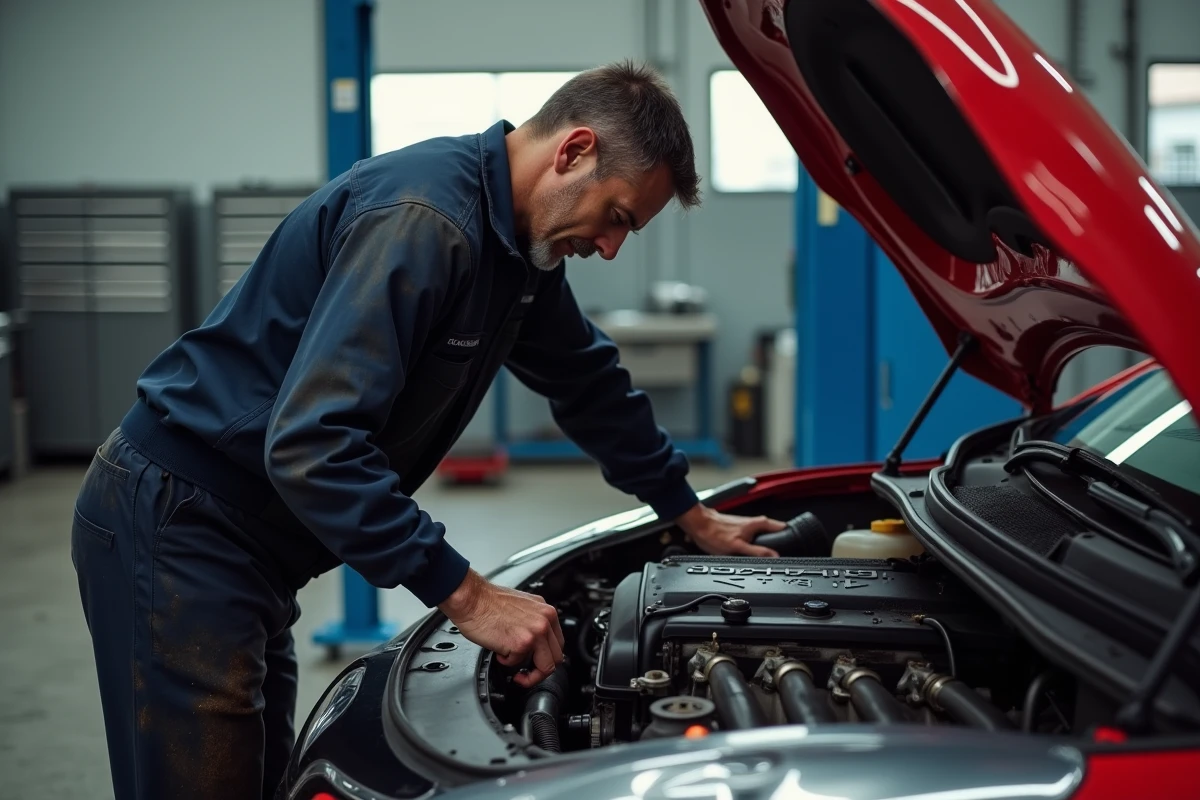
Your Clio 4 dashboard suddenly displays “engine breakage risk.” The natural reflex is panic: one imagines a cracked engine block, a repair costing thousands of euros. In most cases, this message does not indicate an ongoing mechanical failure.
It reflects a threshold exceeded detected by the computer, which can have very varied origins, sometimes benign. Understanding what lies behind this alert allows for quick action and helps avoid unnecessary expenses.
Knocking and computer thresholds: why the warning light comes on in Clio 4
Before discussing a breakdown, it is essential to understand how the engine computer decides to display this message. The unit continuously manages sensors that measure pressure, temperature, and internal vibrations of the engine. When a parameter exceeds a programmed threshold, the alert is triggered.
On the TCe (0.9 and 1.2) petrol engines mounted in the Clio 4, multi-brand diagnostic specialists have reported the recurring appearance of the message without any proven mechanical defect for several years. The recorded fault codes often point to “knocking threshold exceeded” or “knocking learning saturated.”
Knocking is an abnormal combustion in the cylinder. The fuel ignites too early or in a disorderly manner. The knocking sensor detects it, and the computer attempts to correct it by adjusting the ignition timing. When the corrections reach their limit, the system switches to degraded mode and displays the engine breakage alert.
Have you noticed that the message tends to appear more in summer or after filling up at an unusual station? This is not a coincidence. Prolonged use of low-quality E10 fuel, especially in hot weather, promotes knocking in these small turbo engines. The problem then lies with the fuel, not the engine itself.
To delve deeper into the various situations that trigger the engine breakage risk light on Clio 4, reading the computer with an OBD tool remains the first step to take before any mechanical intervention.

Non-compliant engine oil: a frequent and underestimated cause
The other major category of triggers has nothing to do with ignition. It concerns lubrication. Feedback from independent maintenance networks shows a rise in alerts after late oil changes or the use of oils not compliant with Renault specifications RN17 or RN0700-0710.
On the 0.9 TCe and 1.5 dCi engines, the computer monitors lubrication quality via oil pressure sensors and indirect parameters (temperature, RPM). When the oil is too degraded or unsuitable, the protection thresholds are triggered.
The reassuring point: in these cases, the message disappears after a complete oil change and a reset of the engine adaptations. No parts to replace, no disassembly. However, it is necessary to identify this cause, as a rushed mechanic may lead to a heavier diagnosis.
Checks to make before going to the garage
- Check the oil level on the dipstick: a level that is too low or too high can trigger the alert on its own
- Verify the date and mileage of the last oil change, as well as the standard of the oil used (noted on the can or invoice)
- Note if the message appears when cold, hot, after starting, or while driving, as this information guides the OBD diagnosis
- Listen to the engine: a persistent metallic knocking noise at idle is a real mechanical sign, unlike an isolated message without noise
Reprogramming the Clio 4 computer: the software avenue
Renault no longer simply replaces parts to resolve this type of alert. For several years, reprogramming campaigns for the computer have been launched in after-sales service, particularly for the H5Ft (TCe) and K9K (dCi) engine families found in the Clio 4.
These software updates aim to limit turbo overpressures and temperature rises that prematurely trigger the message. In short, the manufacturer has acknowledged that the original alert thresholds were sometimes too sensitive.
If your Clio 4 has never received this update, the message may light up while the engine operates normally. A visit to a Renault dealer or a garage equipped with the manufacturer’s diagnostic tool (CLIP) allows for checking the software version of the computer and applying the reprogramming if available for your vehicle.
OBD diagnosis on Clio 4: read the fault codes yourself
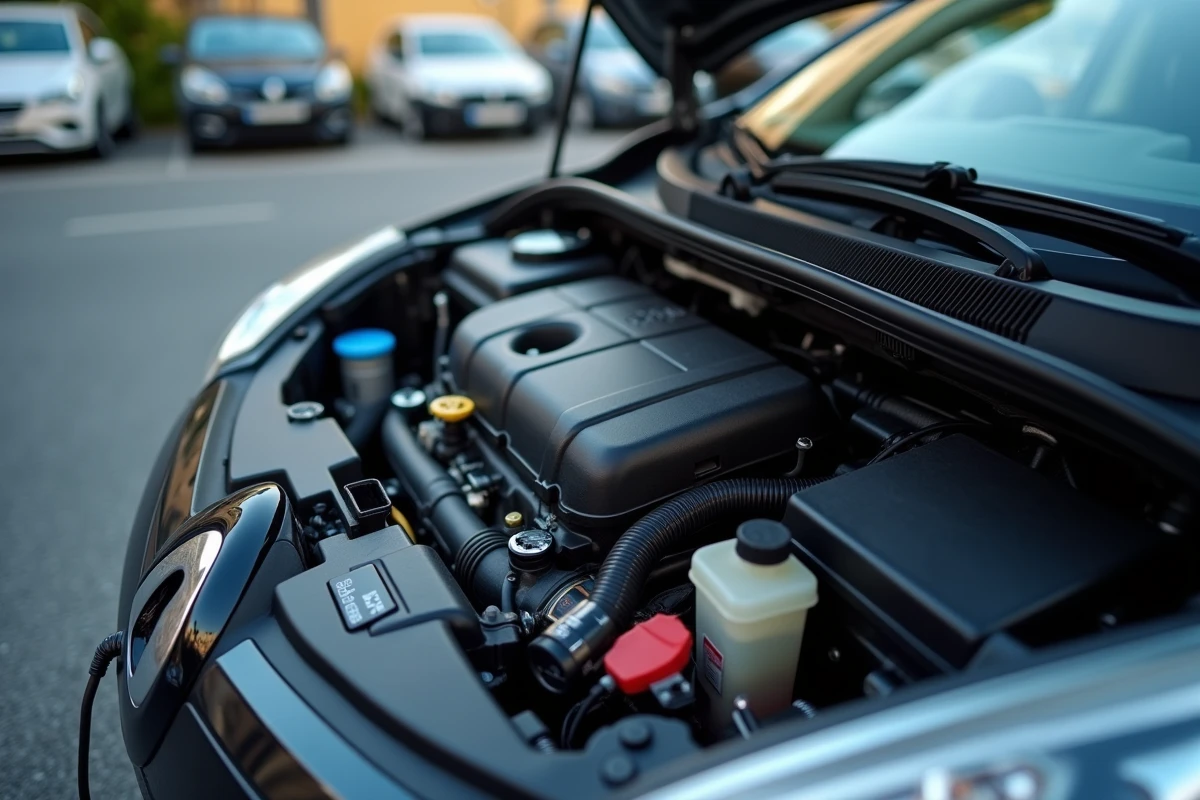
You don’t need to be a mechanic to get a first reading. A basic OBD-II reader plugged into the diagnostic port (under the steering wheel, left side) displays the fault codes recorded by the computer.
Two scenarios arise after the reading:
- The code points to a sensor (knocking, oil pressure, temperature): the problem is often related to the engine’s environment (fuel, oil, faulty sensor) and not to structural breakage
- The code indicates a compression, timing, or turbo issue: here, a thorough diagnosis in the workshop is necessary, as the mechanical risk is real
- No fault code is recorded despite the message: simply disconnecting the battery for a few minutes may be enough to reset the alert, as confirmed by several Clio 4 RS owners on specialized forums
The distinction between these cases helps avoid paying for a turbo replacement or engine removal when the problem can be resolved with an oil change or fuel change.
When should you really be worried?
An engine breakage warning light accompanied by a significant loss of power, abnormal smoke from the exhaust, or a constant metallic noise requires immediate stopping of the vehicle. In this case, running the engine worsens the damage.
On the other hand, a message that appears and then disappears after a restart, without associated symptoms, almost always indicates a false positive from the computer or a minor issue (sensor, oil, fuel). The OBD reading clarifies the situation in a few minutes.
The most cost-effective reflex in response to this alert on Clio 4 remains to connect a diagnostic reader before making an appointment at the workshop. A precise fault code makes the difference between an oil change bill and an engine repair estimate.