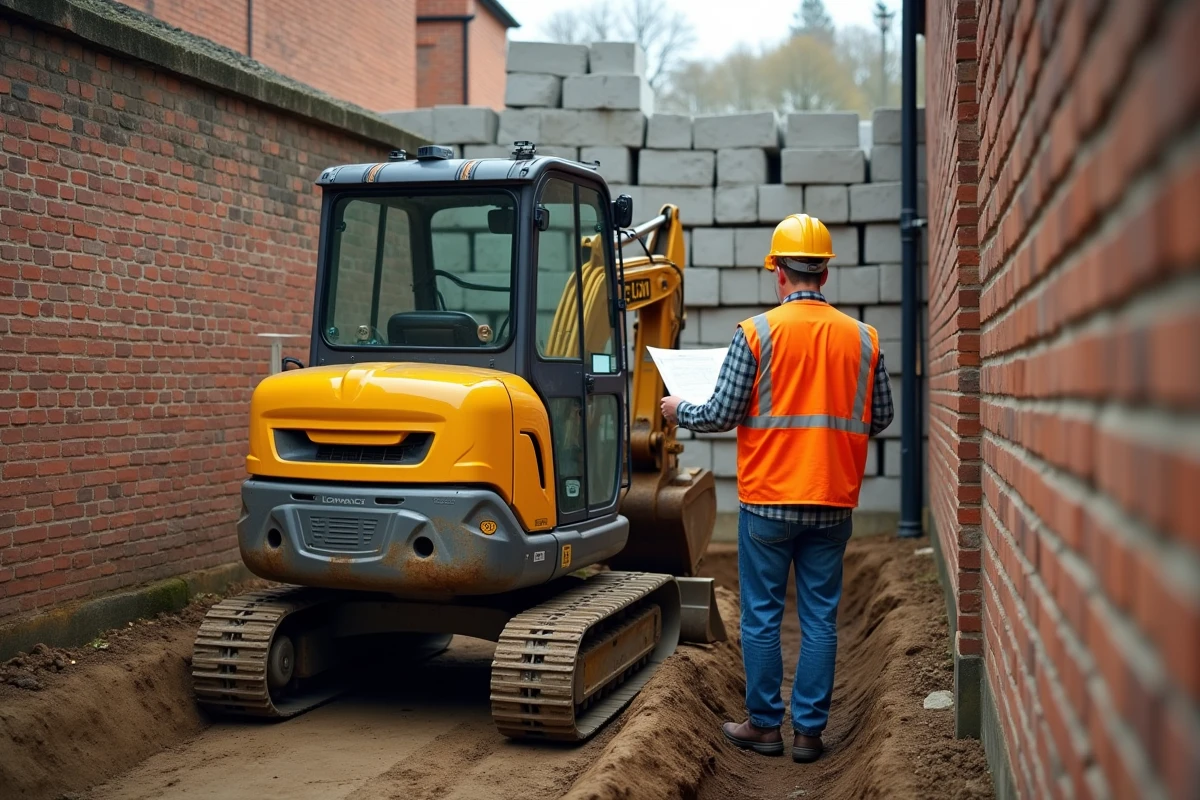
The width of a mini excavator determines its ability to access a construction site. On a machine weighing less than two tons, this overall width is generally around 700 mm at the track level, but this value varies depending on the model, manufacturer, and chosen configuration. Before renting or purchasing, understanding what this measurement entails helps avoid getting stuck at the first gate.
Overall width and actual width: the distinction to know
The technical specifications from manufacturers indicate an overall width measured at the tracks. This figure corresponds to the distance between the outer edges of the two tracks, excluding the cabin or canopy. On the most compact models, this value drops to around 700 mm.
This measurement doesn’t tell the whole story. Several user reports from rentals, shared on professional public works groups between 2023 and 2025, indicate that mandatory accessories for road transport (warning lights, license plates, sometimes quick couplers) add a few centimeters to the advertised width. To accurately assess the dimensions of a mini excavator, it is essential to measure the equipped machine, not just the manufacturer’s specification.
A wide bucket also changes the lateral footprint when turned. In travel configuration, the folded bucket generally does not exceed the width of the tracks, but a digging bucket wider than the chassis will change the situation in a narrow passage.
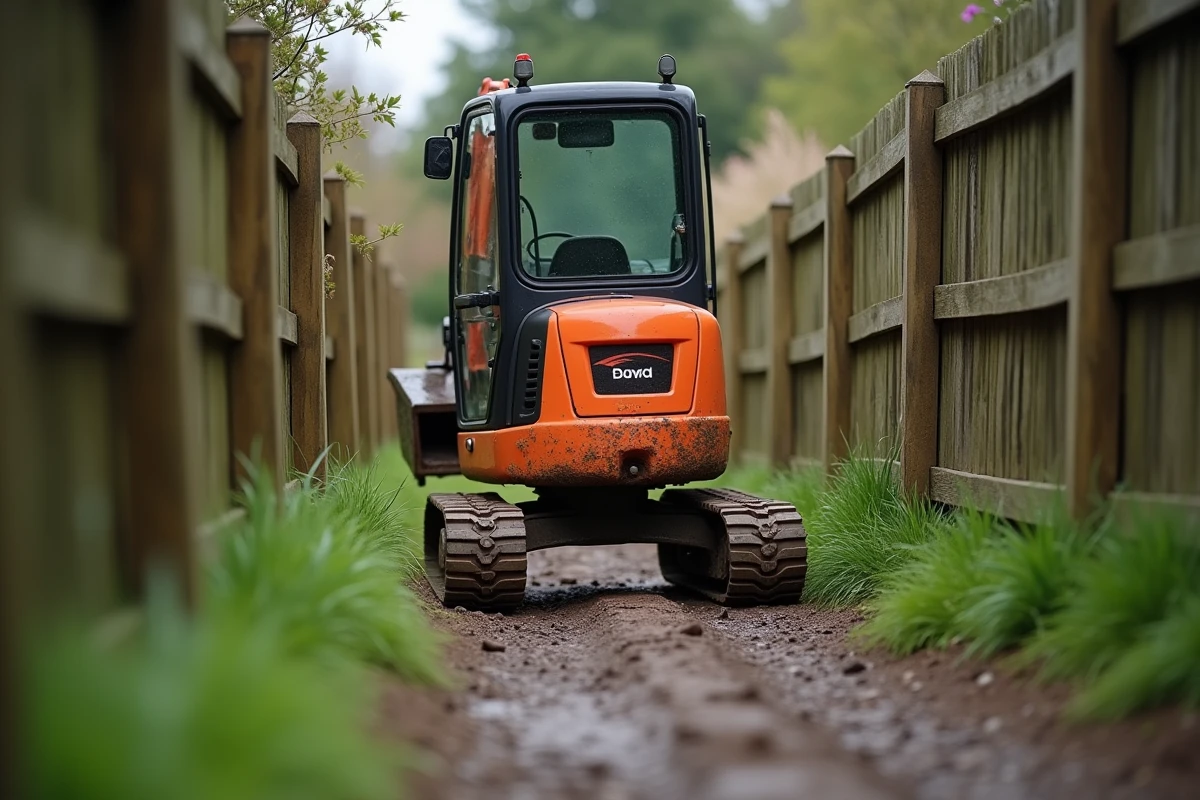
Length and transport height of a compact mini excavator
Focusing solely on width is a common mistake. Field feedback shows that length and transport height become just as critical as soon as a construction site is located in the city center or in an inner courtyard accessible via a basement.
For ultra-compact mini excavators, one should expect about 2.7 m in length and 2.3 m in height with the bucket for transport on a trailer. These values can be reduced by removing the canopy or folding certain elements, a point often absent from manufacturers’ “width” oriented specifications.
For access through a parking ramp, the available ceiling height is as important as the width of the gate. Checking all three dimensions before moving the machine avoids getting stuck halfway, with a trailer that is impossible to maneuver.
Tonnage and track width: the direct link
The tonnage of a mini excavator directly affects the width of the chassis and tracks. The heavier the machine, the wider the tracks must be to distribute ground pressure and ensure stability.
- Micro-excavators weighing less than two tons have the narrowest widths, suitable for gardens, private courtyards, and interior demolitions where every centimeter counts.
- Models weighing three to five tons offer a compromise between digging power and moderate footprint, sufficient to pass through most standard residential gates.
- Beyond six tons, the width often exceeds one meter eighty, which limits access to tight spaces but provides greater digging depth and pulling force.
The choice of tonnage is not just about the desired power. The width of the narrowest passage on the site sets the upper limit for the feasible tonnage. Measuring this passage with a tape measure, taking into account fixed obstacles (walls, posts, visible pipes), remains the first reflex before any rental order.
Compatibility of attachments and accessories: a often overlooked criterion
Recent discussions among public works professionals show a shift in selection criteria. The compatibility of quick couplers and buckets carries as much weight as width in the final decision, especially for small, versatile projects.
A narrow trench bucket, for example, will be useless if the machine’s quick coupler does not match the standard of the rental company or accessory supplier. Conversely, a custom bucket suited to the chassis width allows work in very tight trenches without spilling over the sides.
- Check the type of attachment (mechanical, hydraulic, standard, or proprietary) before renting.
- Ensure that the width of the delivered bucket does not exceed the overall width of the machine if the site imposes narrow passages.
- Allow a few centimeters of clearance between the bucket and the trench walls to enable arm rotation without snagging.
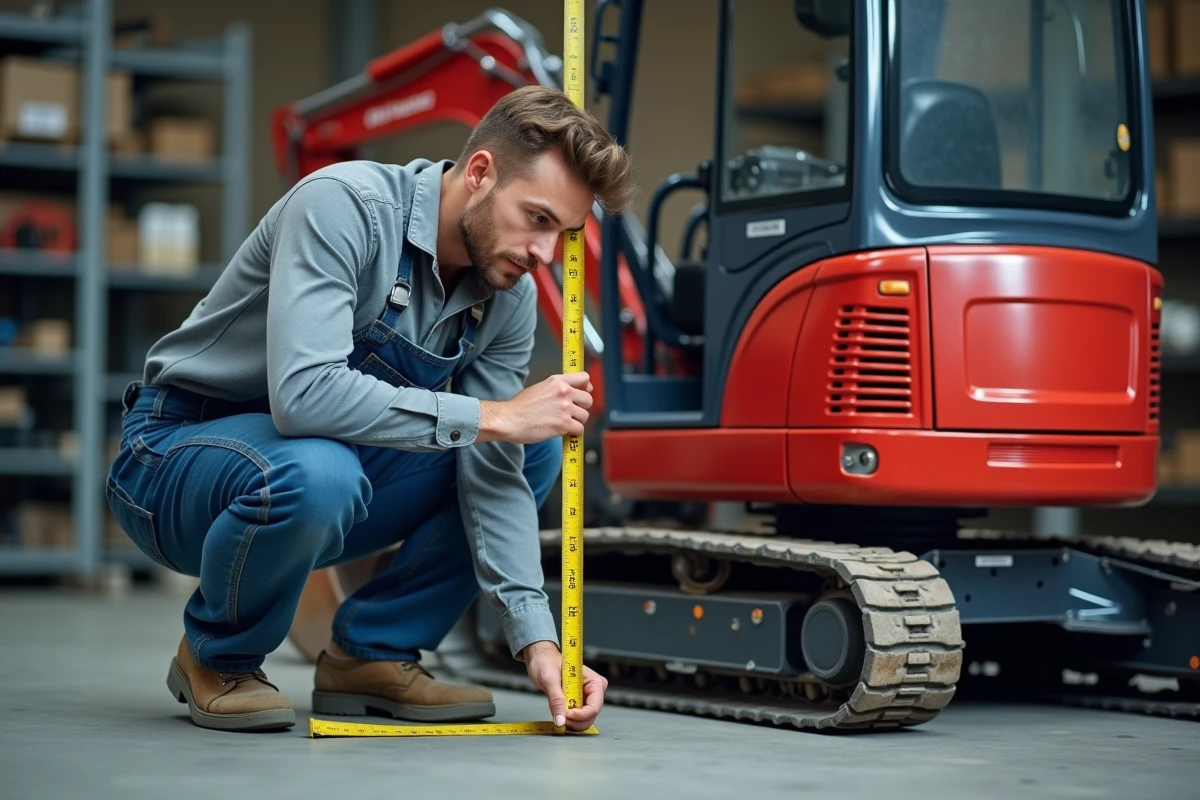
Practical checks before starting on site
Before unloading the mini excavator from the trailer, a few simple checks can prevent costly time losses.
Physically measuring the access passage to the site with the machine in full configuration (bucket, coupler, transport lights) remains the only reliable method. Site plans or visual estimates often underestimate obstacles. An electrical pole shifted by twenty centimeters, an unmarked low wall on the plan, or a protruding curb can be enough to block the passage.
Also check the ground bearing capacity at the site entrance. A micro-excavator still weighs more than a ton, and narrow tracks on soft ground can sink within the first few meters, making access more complicated than expected.
The minimum width of a mini excavator is just one of the parameters to consider alongside height, length, tonnage, and accessory compatibility. Taking ten minutes to measure the actual dimensions of the site, with the equipped machine, remains the most cost-effective action before any workday.