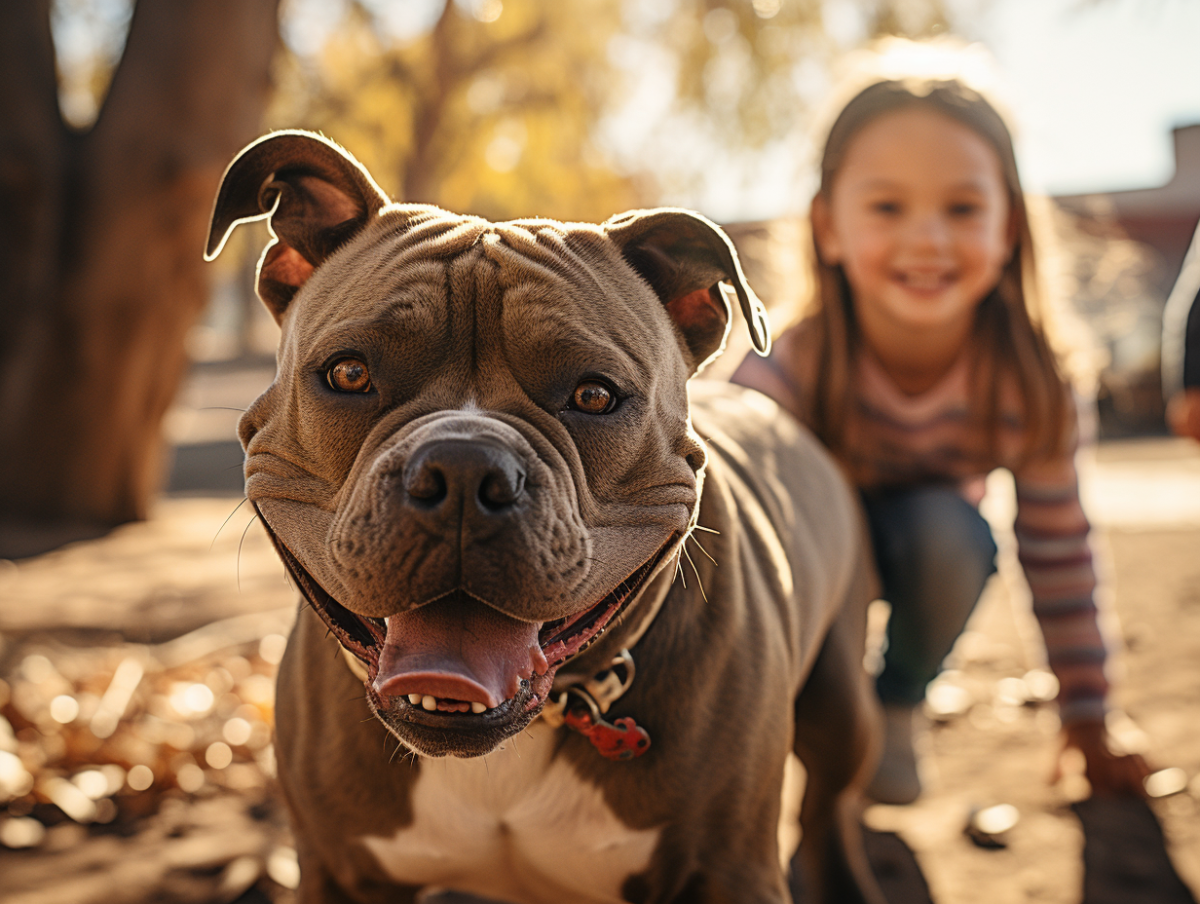
The American Bully is a dog breed known for its impressive stature and loyal temperament. Like any pet, it requires special attention to ensure its physical and mental well-being. Owners must engage in practices suited to this type of dog, which include a balanced diet, regular exercise, and early socialization. Due to their muscular appearance, these dogs may be prone to joint problems, making periodic veterinary check-ups and injury prevention all the more important. Consistent care and a deep understanding of the breed are essential to keep an American Bully happy and healthy.
Optimal Practices for the Physical and Mental Well-being of the American Bully
Fundamental Needs of the American Bully: A good diet, appropriate physical exercise, and regular health care form the basic triad for your dog’s health. Rich in protein and grain-free, the foods you choose should meet the specific nutritional needs of this robust breed, which is prone to joint issues. Careful veterinary monitoring will help prevent and treat potential conditions such as hip dysplasia or wedge-shaped vertebrae.
Training and Socialization: Firm training, early socialization, and positive reinforcement are crucial for channeling the stubborn yet affectionate temperament of the American Bully. The United Kennel Club and the American Bully Kennel Club emphasize these aspects to avoid behavioral problems, including aggression or disobedience. Integrate your dog into various social situations from a young age to promote its adaptation and develop its loyal and faithful behavior.
Mistakes to Avoid with the American Bully: Neglecting training, providing an unsuitable diet, and a lack of physical exercise are common mistakes made by American Bully owners. These errors can lead to both physical and behavioral imbalances. Make sure to dedicate time to your dog’s training and adjust its diet and activity level to its specific needs to maintain its well-being.
Physical Activity and Injury Prevention: The American Bully’s exercise should be intense enough to maintain its musculature without compromising its joints. Special attention should be paid during cold or hot weather, to which the breed is sensitive. Vary activities and monitor for any signs of pain or discomfort that may indicate an underlying health issue. Regular exercise, combined with proper nutrition and care, will ensure your companion’s vitality and peace.

Health and Nutrition Management of the American Bully
Monitoring Robust but Fragile Health: The American Bully enjoys a solid constitution but is not immune to joint problems inherent to its powerful morphology. Cold and extreme heat are also elements against which it must be protected. Constant vigilance and periodic veterinary visits will help detect and manage conditions such as hip dysplasia or wedge-shaped vertebrae.
Prevention of Specific Diseases: The American Bully’s predisposition to joint problems requires sustained attention. The incidence of these diseases can be mitigated through a balanced diet, appropriate exercise, and regular medical monitoring. Owners should be informed about symptoms and possible treatments to respond promptly to any signs of pain or discomfort in their pet.
Nutrition at the Heart of Health: A diet rich in protein and grain-free is recommended to meet the energy needs of the American Bully without overloading its joints. These dietary recommendations help support the development of its musculature while avoiding the risks of overweight that could exacerbate its predispositions to joint diseases.
Costs Associated with the Breed: The price of an American Bully puppy varies and can represent a significant investment. However, managing its health and nutrition does not stop at acquisition. Veterinary expenses for medical follow-up and the quality of food must be considered in the overall budget allocated to the animal’s well-being. Quality nutrition and appropriate veterinary care are long-term investments in your dog’s health.