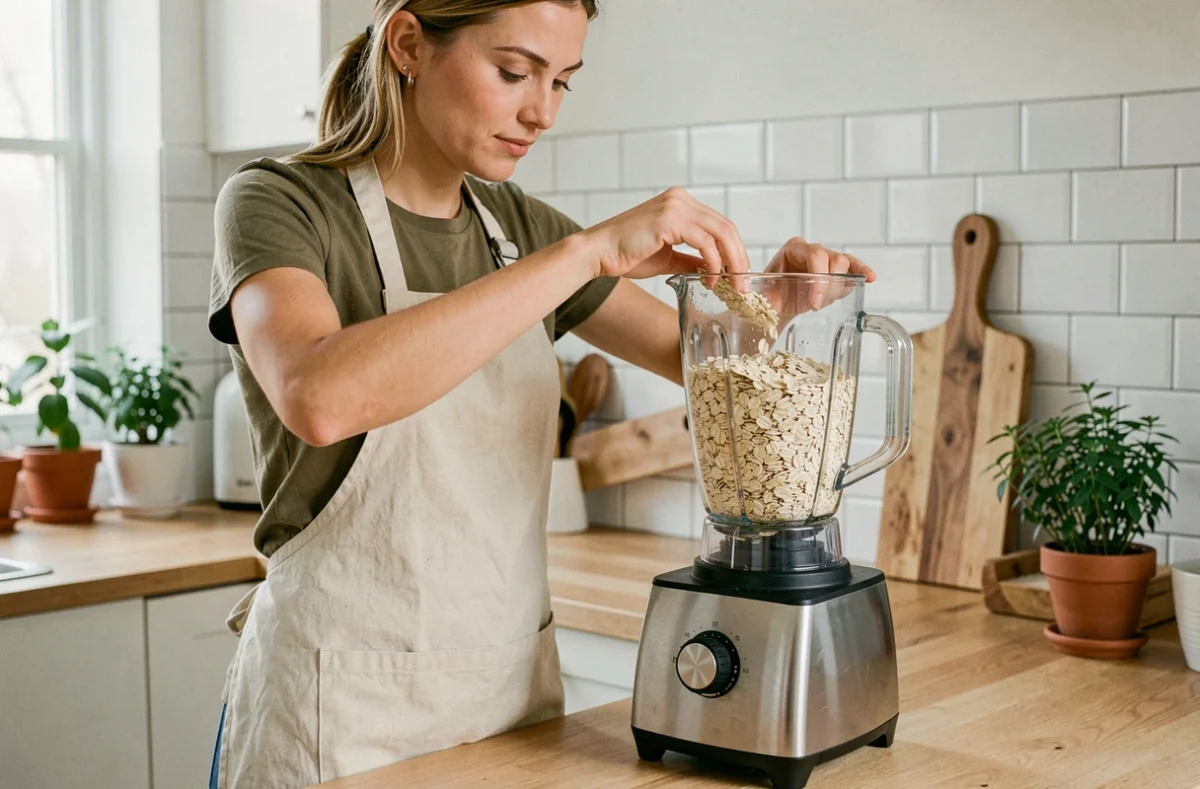
Blending oats does not produce a uniform result. The particle size depends on the type of oats used, the power of the appliance and the blending time. These three variables affect the final texture of porridge, smoothies and pancake batter, as well as how the body digests the starch. Comparing these factors helps you choose the right method for your goal.
Blended oats: how the type of oat affects texture
Not all oats respond to blending in the same way. The difference comes down to how much processing they undergo before reaching the packet.
| Type of oat | Thickness | Result after blending | Texture in recipes |
|---|---|---|---|
| Rolled oats | Thick, minimally flattened | Coarse powder with uneven particles | Retains some bite and thickens slowly |
| Quick oats | Thin, steamed before packaging | Almost uniform flour in a few seconds | Quickly becomes creamy and breaks down fast |
| Instant oats | Very fine, pre-gelatinized | Very fine, almost flour-like powder | Binds immediately, with a risk of a sticky texture |
Rolled oats retain more of their cellular structure. Blended briefly, they produce an uneven meal that thickens a smoothie without turning it into glue. Quick oats, which are already partially broken down, become a uniform powder almost instantly.
To find out how to blend oats with Soyez Sport, first identify the type of oat that best suits your recipe. Creamy porridge calls for a different product than homemade pancake flour.
Blending oats: time and power make all the difference
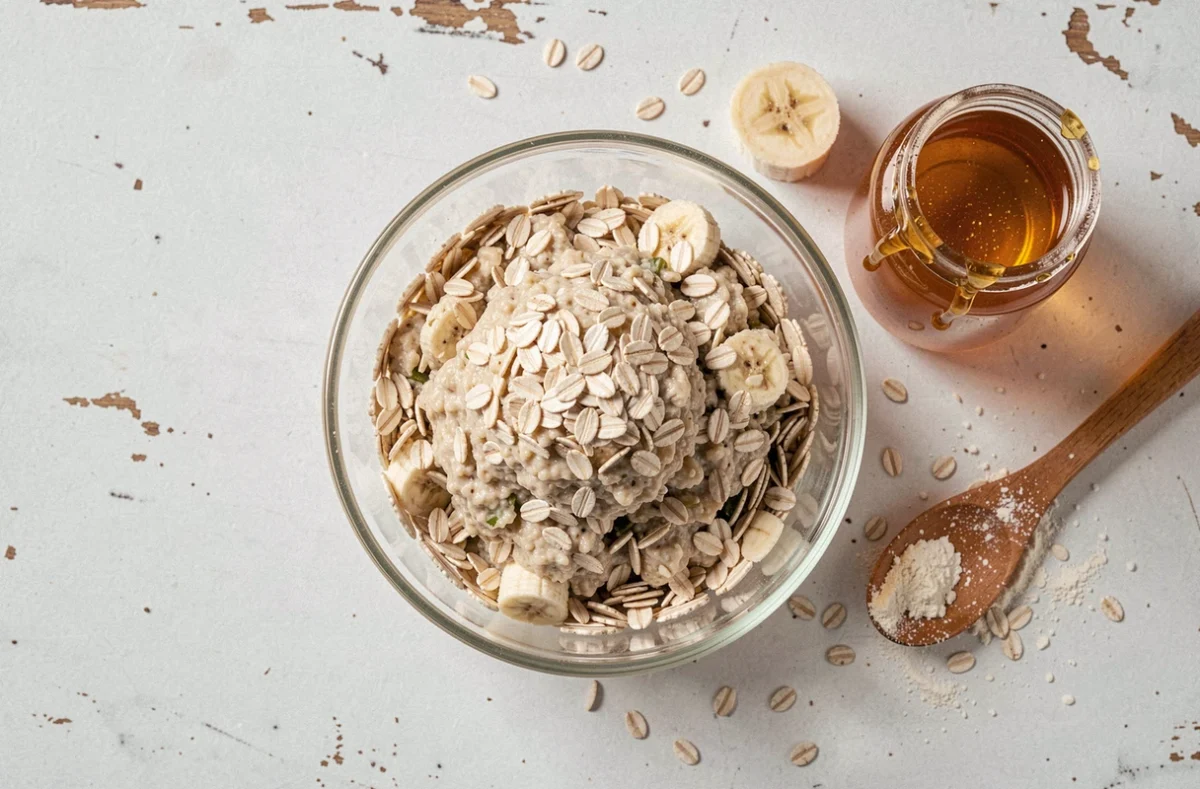
Blending time is not a minor detail. Two to three seconds of pulsing produces coarse pieces that absorb liquid gradually. Ten seconds of continuous blending gives you flour suitable for baking. Beyond that, the motor’s heat may start to affect the flavor.
Standard blender or food processor
A blender with smooth blades (such as a smoothie blender) breaks down oats evenly. A food processor fitted with an S-blade produces a more uneven result, with particles of varying sizes. This unevenness is not a flaw: it creates a more interesting texture in porridge or a bowl.
Coffee grinder or immersion blender
An electric coffee grinder works for small quantities and produces a very fine grind, close to flour. An immersion blender, on the other hand, often lacks the power to break down dry oats. It is better suited to blending oats that have already been hydrated in a liquid mixture (such as a smoothie or pancake batter).
- For homemade oat flour: use rolled oats and a powerful blender, and blend continuously for ten seconds. Sift afterward to remove any coarse particles.
- To thicken a smoothie without lumps: pulse quick oats for three to five seconds before adding the fruit and milk.
- For porridge with some texture: use rolled oats and pulse twice briefly. Then stir in some whole oats to retain some bite.
Blended oats and glycemic response: what grinding really changes
Grinding oats into powder increases their surface area in contact with digestive enzymes. Less processed products have a lower glycemic index than instant versions. This is documented in reviews comparing steel-cut oats, rolled oats and instant oats.
Blending rolled oats at home does not make them equivalent to commercially produced instant oats. Industrial processing involves pre-gelatinizing the starch with steam, which does not happen in a household blender. Home grinding reduces the particle size without chemically altering the starch.
One point is worth noting: the increased viscosity of oat porridge does not automatically improve blood sugar control after a meal. A crossover trial cited in a review found that processes that increased viscosity did not produce the expected effect on post-meal blood sugar. So the creaminess of a recipe is a matter of taste, not a guaranteed metabolic benefit.
Creamy recipes with blended oats: three ways to make the most of different grinds
Thick banana-oat smoothie
Blend a handful of rolled oats for five seconds, then add a ripe banana, milk (dairy or plant-based) and a spoonful of honey. Blend again until smooth. Pre-blended oats thicken the smoothie without leaving lumps. The result is thick enough to serve in a bowl as well as a glass.
Pancakes without wheat flour
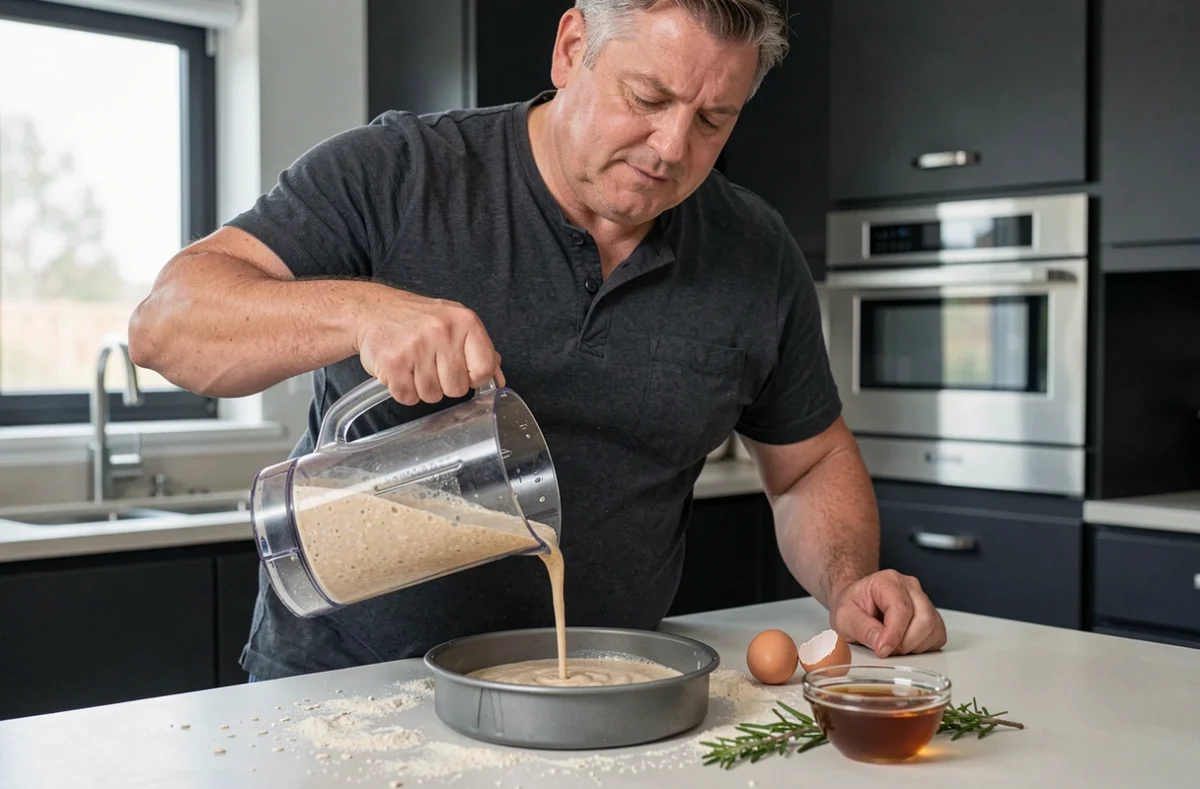
Blend the oats into a fine flour (ten seconds in a blender). Add an egg, milk and a pinch of salt directly to the blender jug. Blend for a few seconds. The resulting batter is thicker than standard pancake batter. Cook in a pan for two to three minutes on each side.
Homemade oat flour absorbs more liquid than wheat flour. Add about a quarter more liquid than a standard recipe calls for to prevent the pancakes from becoming too dense.
Chocolate and fruit porridge
Blend half the oats and leave the other half whole. Cook them together in milk with a tablespoon of unsweetened cocoa powder. The blended oats melt into a creamy base, while the whole oats add crunch. Add fresh fruit after cooking to preserve its texture.
The type of oat and blending time alone determine the difference between a grainy preparation and a creamy result. Grinding oats at home gives you a level of control that instant oats cannot offer, since you can adjust the fineness for each recipe.
One often-overlooked factor remains: resting time. Letting the mixture sit for five minutes after blending allows the soluble fiber to swell and naturally thicken the texture, without adding fat or a thickener.