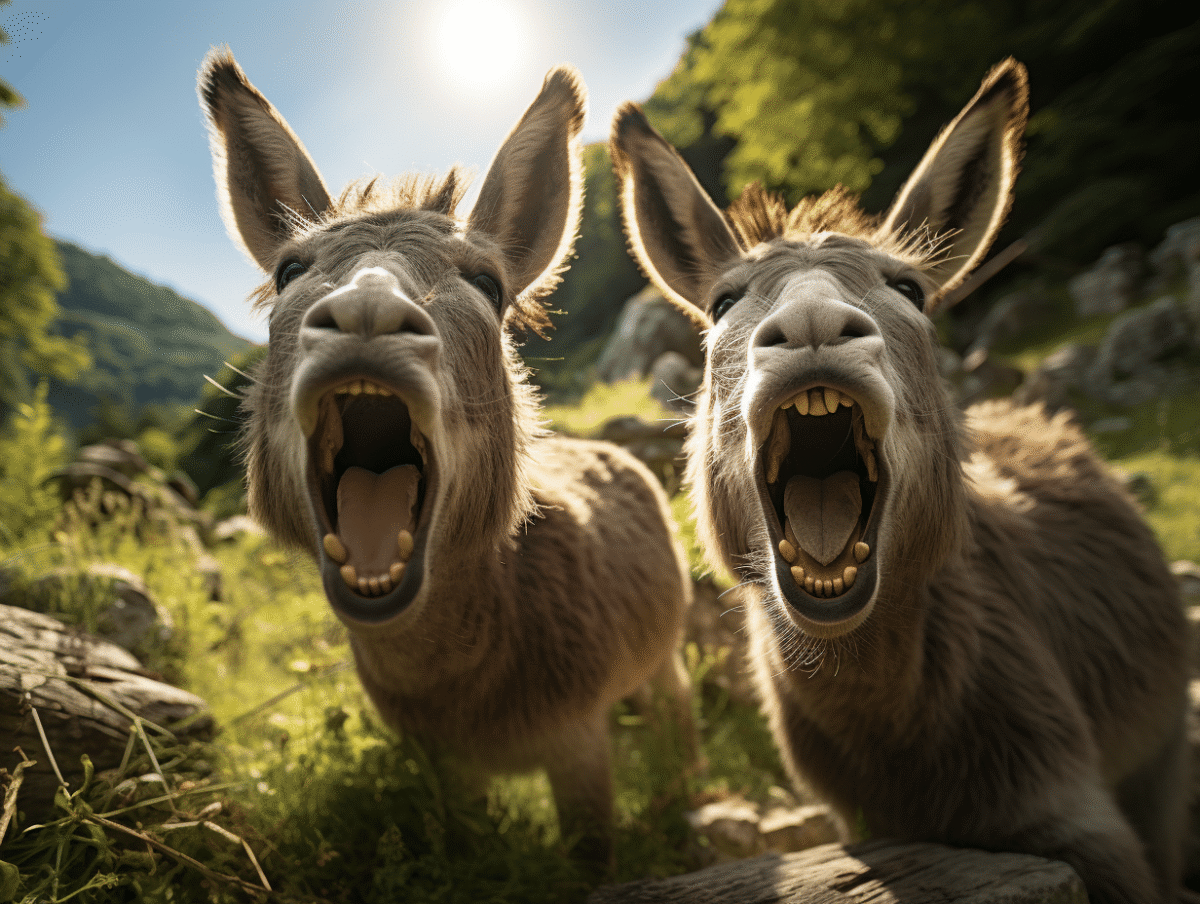
Donkeys, often mistakenly perceived as mere pack animals, actually possess a rich repertoire of communication. Their interactions are not limited to the iconic braying but also include subtle body language. Erect or flattened ears, tail position, and head movements are signals that, combined with various vocalizations, express a range of emotions from curiosity to annoyance. Understanding these communicative mechanisms is essential for anyone working or living near these animals, as it helps establish more harmonious connections and prevent misunderstandings.
The Vocalizations of Donkeys: A Rich Sound Communication
The bray, often caricatured in popular culture, is actually a complex and nuanced manifestation of sound communication in donkeys. Far from being a simple monolithic cry, the cry of the donkey varies in intensity, duration, and frequency depending on social contexts and the specific needs of the animal. These sound nuances allow donkeys to maintain contact with their peers over long distances, alert in case of danger, or express their distress. Recent studies have shown that different brays are used by donkeys to differentiate themselves from horses, thus reinforcing their specific identity within the equine family.
Careful observation of vocalizations reveals a range of sounds that, while less frequent than braying, are essential to the trust relationship that can develop between the donkey and humans. Softer whinnies, whimpers, or even snorts are signs of recognition, affection, or contentment. These less audible but equally significant sounds reflect a peaceful and friendly state of mind, characteristics appreciated in domestic donkeys.
These elements of animal communication demonstrate the intelligence and good memory of donkeys, capable of remembering the voices and specific calls of their peers or the humans they interact with regularly. This rich sound communicative ability, far from being anecdotal, proves fundamental for anyone seeking to understand and interact respectfully with these animals. Vocalizations, in short, are the echo of a complex social life and a range of emotions that donkeys express with surprising diversity.
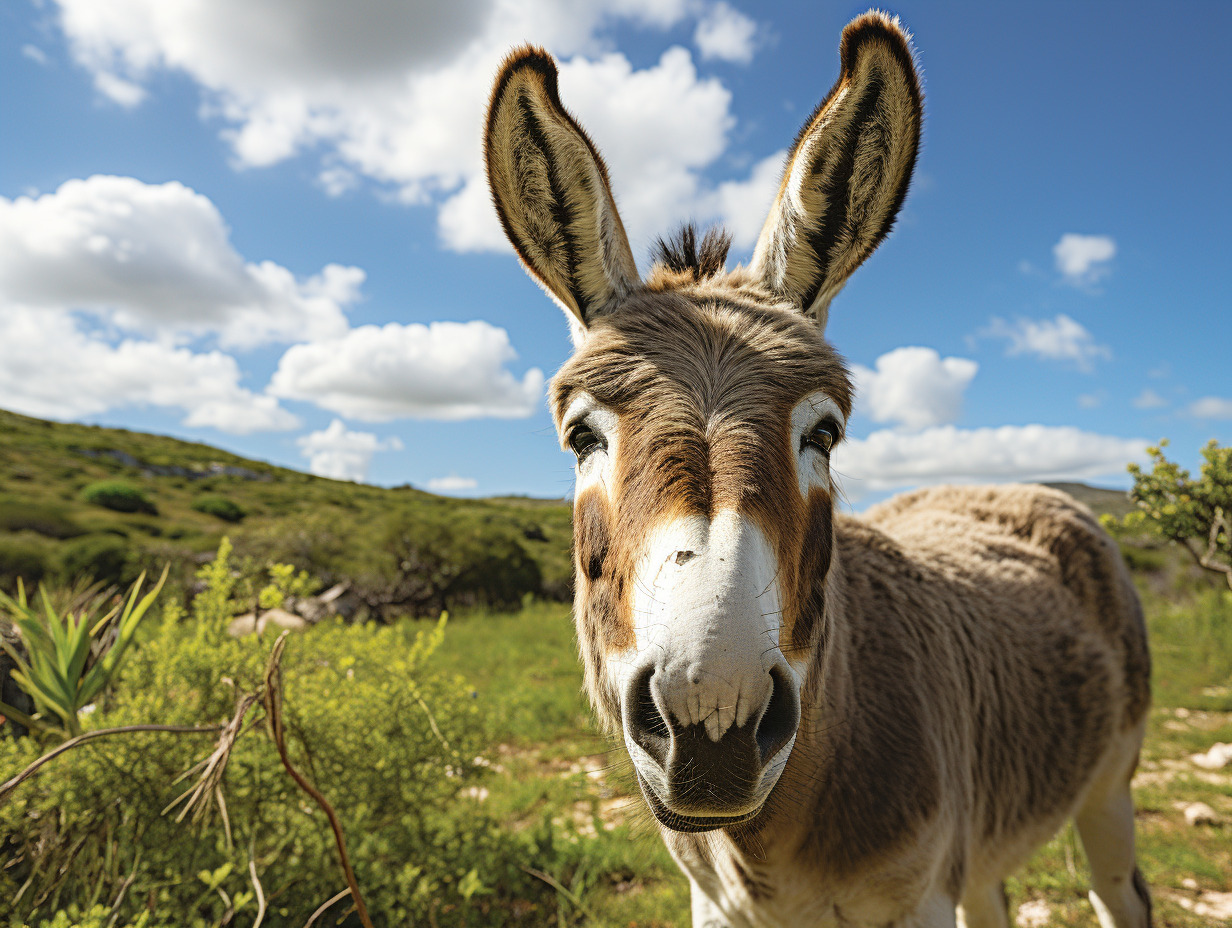
The Body Language of Donkeys: Expressive Visual Signals
Beyond the richness of their sound communication, donkeys have a body language that is equally expressive and deserves careful exploration. For example, ear movements are not mere reflexes but true indicators of their emotional state. Erect ears signal curiosity and attention, while a backward tilt may betray irritation or fear. These visual signals are essential for deciphering the animal’s mood and avoiding misunderstandings that could lead to defensive reactions.
The donkey’s gaze, often perceived as gentle and calming, also contributes to this non-verbal communication. Sustained eye contact is seen as a sign of trust and reassurance, while avoiding eye contact may indicate discomfort or submission. The body position and gait of the donkey provide information about its confidence or hesitation, its intentions to flee or approach, thus allowing predictions and understanding of its reactions.
In the face of a threat, the donkey, despite its generally peaceful and friendly nature, knows how to defend itself vigorously. The use of hind legs to kick and potential biting should not be overlooked. These defensive behaviors, often misinterpreted as stubbornness or aggression, are actually expressions of fear or discomfort. The defensive behavior of the donkey is therefore a critical aspect of its body language, revealing the importance of respecting its comfort zone and establishing clear communication to ensure its safety and that of its caretakers.